Mahama: reparations for the slave trade are not limited to cash payments
Ghana's President says investment in education, health and debt relief can also form part of reparatory justice.
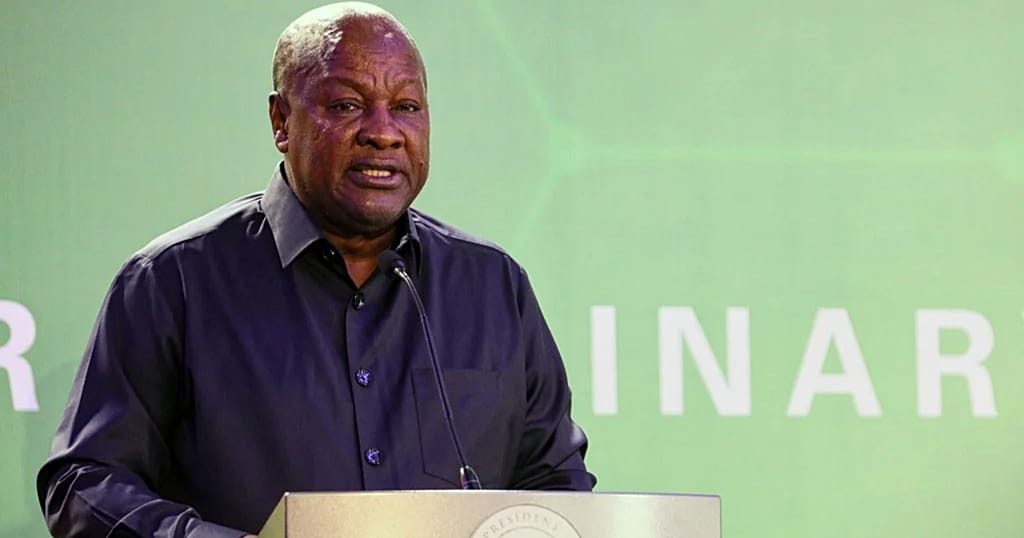
President John Dramani Mahama of Ghana has said that reparations for the transatlantic slave trade need not be confined to direct cash payments, and could include investment in education, health and economic growth, as well as relief on sovereign debt.
Mr Mahama was the principal advocate of a resolution adopted by the United Nations General Assembly in March this year, which describes the transatlantic slave trade as "the gravest crime against humanity" and calls on the states involved to pursue restitution and compensation. The non-binding text was supported by 123 member states, the strongest international endorsement of the reparations case to date.
The President has established three working panels to explore practical routes to reparatory justice.
The debate has gathered pace in recent weeks. At the Commonwealth Heads of Government Meeting in Antigua and Barbuda, the British Prime Minister, Andy Burnham, raised the possibility of a formal apology for the United Kingdom's role in slavery, while ruling out the financial reparations sought by several Caribbean states. Foreign Secretary Ed Miliband said reparations were "not feasible" for Britain, but that there were "things we can work on co-operatively".
Between 10 and 15 million enslaved Africans are estimated to have been transported to the Americas over four centuries.