Togo's Gilbert Houngbo re-elected head of the International Labour Organization
The former Togolese prime minister won 51 of 56 votes in the ILO governing body after Spain's Labour Minister, his only remaining rival, withdrew on the eve of the ballot.
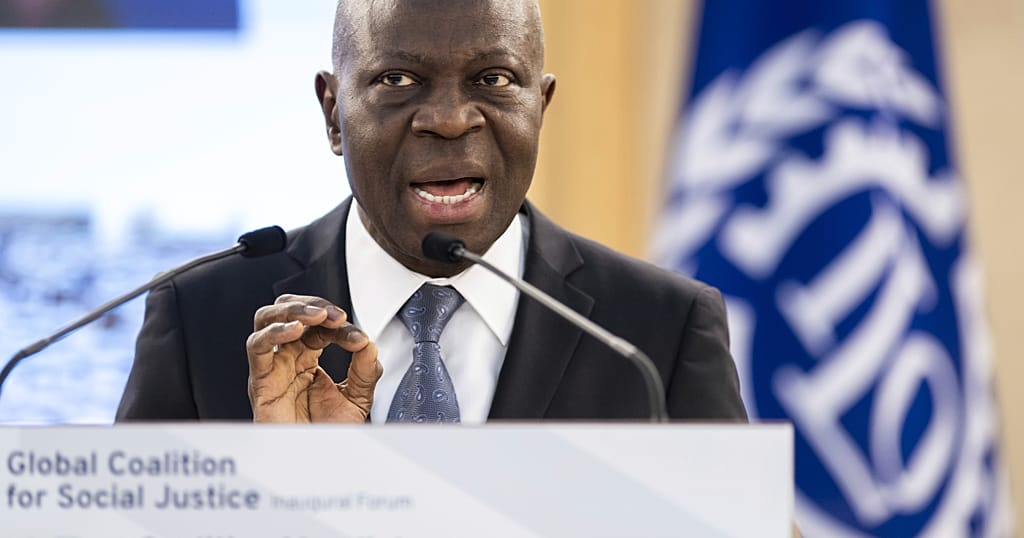
Gilbert Houngbo, a former Prime Minister of Togo, has been re-elected as Director-General of the International Labour Organization (ILO) for a second five-year term, which will begin on 1 October 2027.
Mr Houngbo, 65, received 51 of the 56 votes cast at a meeting of the agency's governing body at its headquarters in Geneva on Monday, 16 November. There were five abstentions, an ILO spokeswoman told AFP.
His path was cleared when the Spanish Labour Minister, Yolanda Díaz Pérez, withdrew her candidacy shortly before the vote. She said she wished to avoid dividing the trade union movement. "I will not divide the trade union movement," she wrote on Bluesky, while accusing the current leadership of having "plunged the organisation into the deepest financial crisis in its history". She also criticised the leaders of the International Trade Union Confederation and the ILO Workers' Group for backing Mr Houngbo. The only other declared candidate, the former Peruvian Foreign Minister Javier González-Olaechea, had pulled out on 4 November.
Artificial intelligence and funding pressures
In remarks after his re-election, Mr Houngbo said the organisation's mission remained "more relevant than ever" more than a century after its founding, describing it as the duty "to promote social justice as the foundation for universal and lasting peace". Among the challenges facing the world of work, he singled out artificial intelligence, saying it would create new opportunities while raising fundamental questions about jobs and skills, and that the ILO must help ensure "that technological progress remains at the service of humanity".
The ILO, founded in 1919, has 187 member states and is the only United Nations agency in which governments, employers and workers are all represented. It has been through a difficult period in recent months, as a fall in international funding, in particular from the United States, has forced reforms that include job cuts.